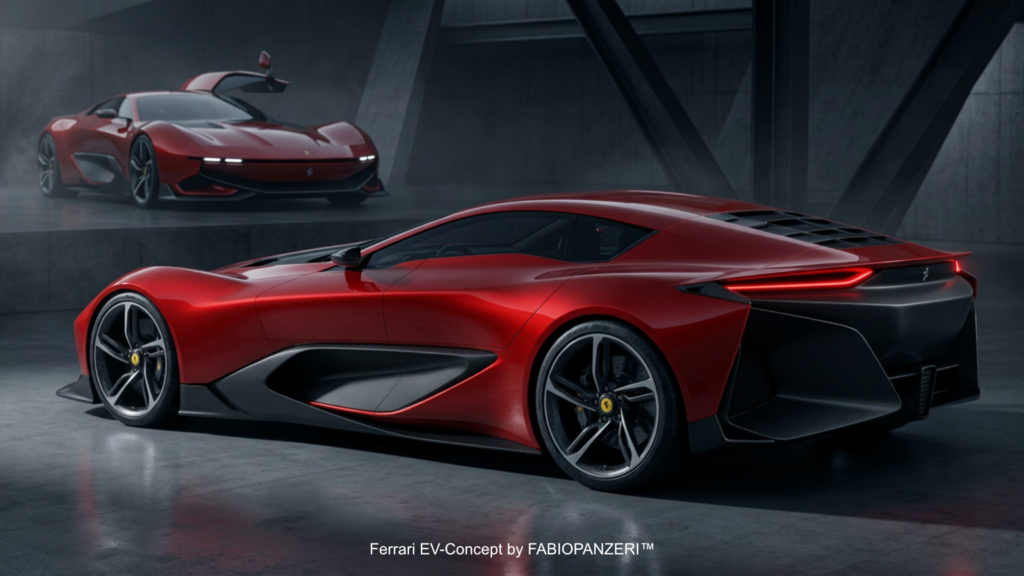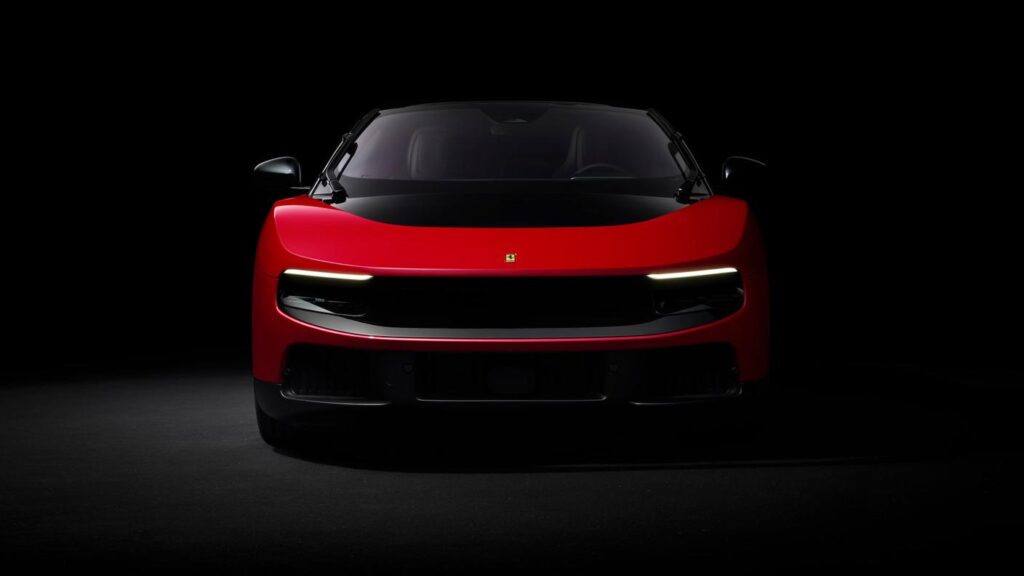
Ferrari Does Not Reinvent Itself. It Betrays Itself.
I've Spent Thirty Years in Luxury. The Ferrari Luce Debate Is Being Had by the Wrong People.
I have spent thirty years building brands in luxury. Leather goods, haute horlogerie, eyewear, fragrance. Brands that exist not because they solved a problem, but because they embodied a truth. I know what a luxury object is. I know what it is not.
And what I am watching in the Ferrari Luce debate is a category error so fundamental it would be amusing — if the stakes were not so high.
The conversation has been taken over by marketers. Brand strategists with consumer goods backgrounds who have learned the vocabulary of luxury without understanding its grammar. People who can write “UHNW client” in a deck and genuinely believe that phrase constitutes market analysis. People who treat a Ferrari the way they would treat a premium sneaker drop — a product to be repositioned, refreshed, made accessible to the next generation of high-income consumers.
They are not wrong about everything. They are wrong about what matters.
Luxury is not expensive consumer goods.
This is the confusion that runs through almost every commentary I have read on the Luce. The assumption that luxury is simply consumer at a higher price point — that the mechanics of desire, adoption, and market expansion are the same, just with more zeros.
They are not.
Consumer goods operate on a logic of aspiration and access. The goal is to reduce friction, broaden reach, democratise the dream. A great consumer brand asks: how do we make more people want this, and how do we make it easier for them to have it?
Luxury operates on an entirely different logic. It is not about access. It is about exclusion — not social exclusion, but ontological exclusion. A luxury object exists in a different category of reality from a consumer object. It carries time, craft, myth, and irreplaceability. It does not want to be understood by everyone. It wants to be recognised by the few who already know.
Ferrari is not a luxury brand that makes fast cars. Ferrari is a mythological system that occasionally produces objects. The car is the physical manifestation of the myth. The myth is the product.
When you touch the myth — when you invite it to explain itself to a new audience, to be accessible to a client who has never engaged with its rituals — you are not expanding the market. You are diluting the substance that makes the market worth having.
The AP × Swatch lesson nobody is citing.
Audemars Piguet understood this. When it wanted to bring the Royal Oak emotion to a broader audience, it did not build an entry-level Royal Oak. It did not hire a Silicon Valley designer to make the watch feel more relevant to tech executives. It created a deliberate, limited, temporary object with Swatch — a brand whose entire identity is the democratisation of watchmaking — and it declared explicitly what the object was: a tribute, not a continuation.
The result: the Royal Oak became more desirable, not less. The AP price rose. The collector smiled.
Ferrari had that option. It could have created a parallel electric object — limited, collaborative, clearly positioned outside the core mythology. It could have brought new clients into the orbit of the brand without asking existing clients to renegotiate their faith.
Instead, it put the Prancing Horse on it. Called it Ferrari. Presented it to the President of the Republic as the future.
That is a marketing decision, not a brand decision. And it was made by people who understand marketing.
What no one is saying.
The Ferrari Luce may be a beautiful object. The engineering may be extraordinary. LoveFrom may have produced something genuinely accomplished.
None of that is the point.
The point is that certain brands are not products. They are contracts. And contracts are not renegotiated by one party, unilaterally, in public, with a press conference.
The clients who built Ferrari’s pricing architecture — the fifteen thousand collectors worldwide who treat Ferrari ownership as a curatorial practice — did not sign up for evolution. They signed up for truth. A specific, irreplaceable, non-negotiable truth about what a Ferrari is.
You can be electric. You can be silent. You can evolve every material, every system, every technology. But you cannot change the character. Character is not a feature. It is the reason the object exists.
The marketers missed that. They saw a product. They built a strategy. They forgot they were handling a mythology.
And mythologies, once broken, do not respond to press releases.